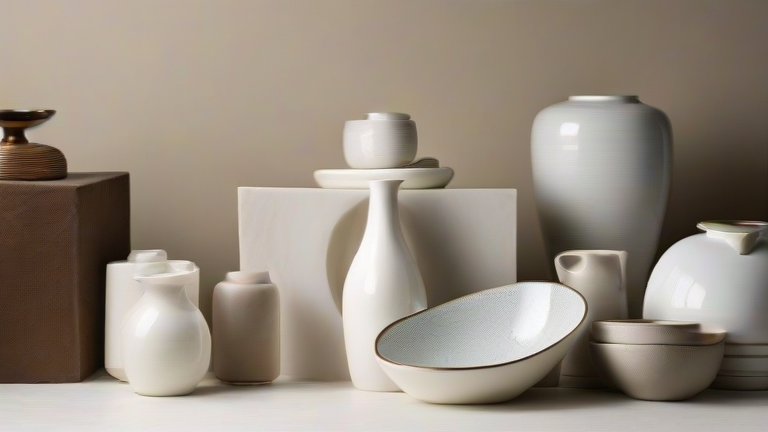
TL;DR: Before buying porcelain, verify its translucency, ring, and weight to distinguish fine china from stoneware. Always check for crazing, uniformity of glaze, and the maker’s mark to avoid overpaying for common commercial ware.
1. Learn the “Ring” and “Translucency” Test
Hold the piece by a rim or foot ring and flick it with a fingernail. True hard-paste porcelain produces a clear, bell-like ring that sustains for 2–3 seconds; stoneware and earthenware give a dull thud. Then, cup the piece in your hands and shine a bright flashlight through the base or wall. If it glows with a warm amber light, it’s high-fired porcelain. If it’s opaque, it’s not—walk away unless the price is dirt cheap.
If you want to dig deeper, check out our guide on Porcelain Buying Guide: Safe Health Tips for Ceramic Cookwar.
2. Inspect the Foot Rim and Base for Unfinished Marks
Turn the item over. Quality porcelain has a smooth, unglazed foot rim (called “dry foot”) that feels like fine sandpaper, not rough gravel. Look for a recessed, polished base—many fakes have a gritty, unrefined bottom. Also, check for a maker’s mark: authentic Meissen, Royal Copenhagen, or Herend pieces have hand-painted or underglaze marks. If the mark is a sticker or printed in a sloppy font, assume it’s a tourist reproduction.
3. Examine the Glaze for “Crazing” and Bubbles
Hold the piece at a 45-degree angle under direct light. Fine crazing (micro-cracks in the glaze) reduces value by 30–50%—it also means the piece is not food-safe for acidic liquids. Use a jeweler’s loupe to check for tiny pinprick bubbles in the glaze. Dozens of bubbles indicate low-temperature firing, which makes the porcelain soft and prone to chipping. High-fired porcelain has a glassy, almost liquid-smooth surface.
4. Weigh It Against Your Expectations
Pick up a piece of known fine china (like Limoges) in one hand and the candidate in the other. Fine porcelain feels surprisingly light for its size—it’s the result of vitrified, dense clay with no air pockets. Heavy, clunky “porcelain” is often just glazed stoneware. A simple rule: if it makes your wrist ache after 10 seconds, it’s not high-end porcelain.
5. Check the Edges for “Grinning” and Warping
Run your finger along the rim and any handles. A perfect piece has a smooth, even edge with no “grinning”—that’s the term for exposed, unglazed clay where the glaze pulled away during firing. Place a flat ruler across the rim. If you see a gap larger than 1mm, the piece is warped, which is a firing defect. Slight warping is common in vintage pieces, but for new purchases, reject it.
6. Verify the Decoration Method (Under vs. Over Glaze)
Run your fingernail across a painted flower or gold band. If the paint feels raised and you can feel a ridge, it’s overglaze (enamel) decoration—this is normal for hand-painted porcelain, but it will wear off with dishwasher use. For daily-use porcelain, insist on underglaze decoration: the pattern should feel perfectly flush with the glaze, as if it’s inside the surface. For gold accents, check for a tiny “22K” or “24K” stamp; unmarked gold is often low-carat and will tarnish.
7. Ask for the “Provenance” and Firing Temperature
Always ask the seller for the firing temperature. True porcelain fires at 1,260°C–1,400°C. If they say “1,100°C–1,200°C,” it’s technically stoneware or earthenware, regardless of marketing
Leave a Reply