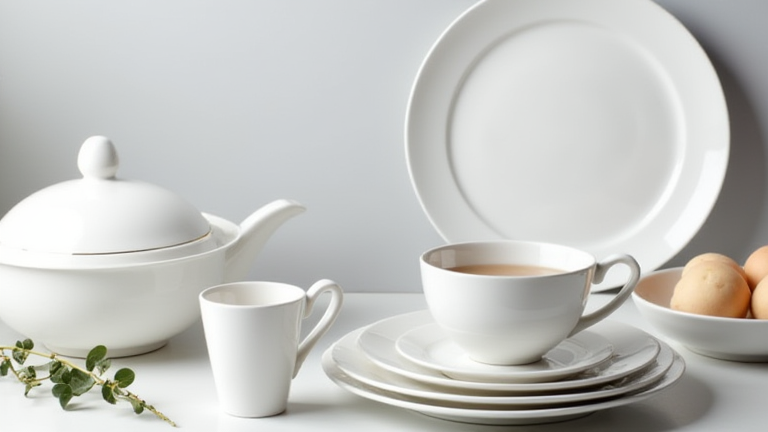
TL;DR: Choose a porcelain set by prioritizing durability (look for “high-fired” or “stoneware-strength” porcelain), then match the style to your daily use—bone china for elegance, standard porcelain for everyday. Always check for chip resistance, dishwasher safety, and whether pieces are sold open-stock for easy replacement.
Step 1: Understand Porcelain Grades
Not all porcelain is equal. “Hard-paste” porcelain (fired at 1,300°C+) is denser and more chip-resistant, while “soft-paste” is more decorative but fragile. For daily use, choose “high-fired” porcelain (often labeled “vitrified”). Avoid “porcelainized” earthenware—it’s just glaze over clay and will craze quickly.
Step 2: Assess Your Lifestyle
If you have kids or host often, skip delicate hand-painted rims and opt for a plain, rolled-edge design. For formal entertaining, a thin, translucent bone china (25% bone ash) is classic—but know it’s less microwave-safe. For everyday, pick a mid-weight porcelain with a matte or satin glaze that hides scratches.
Step 3: Check the “Ring” Test
Tap the rim of a plate with your fingernail. A clear, bell-like ring indicates high-density porcelain. A dull thud means lower quality or porous body. Do this for every piece—cups, bowls, and platters—because firing inconsistencies can occur within the same set.
Step 4: Inspect the Foot and Glaze
Turn a plate over. The unglazed foot ring should be smooth, not rough or gritty. Rough edges will scratch your table. Run your finger across the glaze—it should be silky, with no pinholes or bumps. Check for “crazing” (tiny spiderweb cracks) in the glaze, which weakens the piece over time.
Step 5: Verify Durability Claims
Look for “chip-resistant” or “vitrified” on the packaging. Better yet, check the manufacturer’s warranty—top brands offer 5-year chip replacement. Avoid sets that say “hand-wash only” if you own a dishwasher. Also, ask if the pattern is “open-stock,” meaning you can buy single plates later. Sets with discontinued patterns are cheap now but costly when a plate breaks.
Step 6: Match Your Tableware Needs
Count your actual usage. A 16-piece set (4 place settings) is enough for a couple. A 48-piece set (8 settings) is better for families. But skip oversized dinner plates (12″+) if your cabinets are shallow. Also, check stackability—some porcelain sets have raised rims that make stacking wobbly and prone to chipping.
Step 7: Test Heat and Acid Resistance
Read the fine print: porcelain should withstand oven up to 350°F (not broiler) and acidic foods (tomato, lemon) without staining. A quick home test: put a spoonful of vinegar on a plate for 10 minutes. If the glaze dulls or bubbles, reject it. Also, microwave-safe porcelain must not have metallic or gold trim—those spark.
FAQ
Q: What is the difference between porcelain and bone china?
A: Bone china contains 25–30% bone ash, making it thinner, more translucent, and lighter than porcelain. Porcelain is denser and more durable but less delicate. Choose bone china for formal elegance, porcelain for everyday resilience.
Q: Can I put porcelain in the dishwasher and microwave?
A: Most high-fired porcelain is dishwasher-safe, but avoid “gold” or “platinum” trim—those are metallic and will fade. For microwave, only use plain porcelain without metallic accents. Always check the base stamp; if it says “decorative only,” skip both.
<strong
Leave a Reply