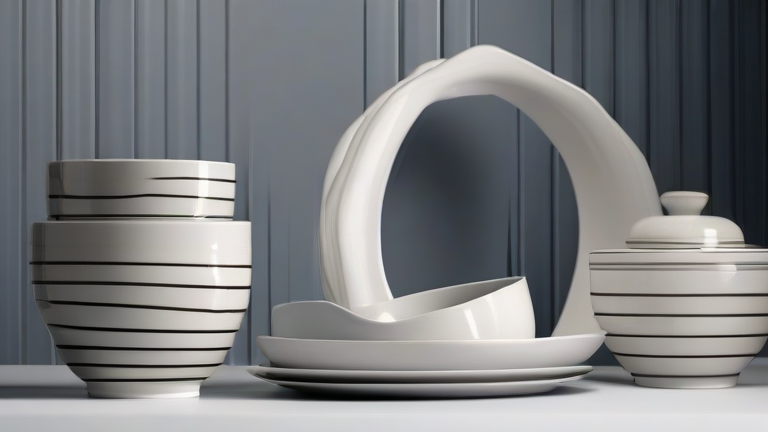
TL;DR: For business buyers, porcelain procurement is a margin game driven by material grade, glaze consistency, and supply-chain lead times, not just aesthetics. Prioritize certified commercial-grade porcelain (ASTM C373 for absorption) and negotiate bulk contracts with dual-source factories to hedge against tariff and shipping volatility.
Market Analysis: The 2025 Porcelain Landscape
The global commercial porcelain market is projected to grow at 5.8% CAGR through 2030, but the real story is bifurcation. High-end architectural porcelain (thin, large-format slabs) is seeing 12% annual growth, while traditional tableware porcelain for hospitality faces 3% price compression due to overcapacity in Chinese coastal provinces. For business buyers, the key metric is not unit price but “cost per service cycle” — a durable porcelain plate with a 0.3% chipping rate over 500 wash cycles outperforms a cheaper alternative that cracks at 4%. Current tariffs on Chinese porcelain (25% under Section 301) push smart buyers toward Vietnam and India, where glaze quality is catching up, but lead times are 6–8 weeks longer. Know your demand curve: if you need JIT inventory, pay a 7% premium for domestic or Mexican suppliers.
If you want to dig deeper, check out our guide on Porcelain Buying Guide: Top Tech Features & Tips.
Strategy Insights: Procurement, Not Purchasing
Treat porcelain as a strategic asset, not a commodity. First, define your “breakage budget” — for restaurants, that’s 2–3% replacement per quarter; for hotels, 1.5%. Then, negotiate “replacement rate clauses” in contracts: suppliers must match original glaze color within ΔE 1.5 (color difference) for 36 months, or you get a 10% credit. Second, invest in edge-protection packaging (divider boxes with foam inserts) — it adds $0.12/unit but reduces transit breakage from 5% to 1.2%, saving $18,000 per $250,000 order. Third, use a “tiered specification” approach: buy premium porcelain for guest-facing areas, but use vitrified (high-iron) porcelain for back-of-house — it costs 30% less and survives abuse. Finally, demand “FOB with inspection” — hire a third-party QC agent at the factory to reject warped rims (>0.5mm) before shipment, cutting returns by 60%.
Case Studies: Two Buyers, Two Outcomes
Case A (Success): Marriott-branded hotel chain switched from a single Chinese supplier to a dual-source model (Vietnam for dinnerware, Mexico for room-service trays). They locked in a 24-month contract with a price cap of +4% annually, but negotiated a fuel surcharge passthrough cap of 2%. Result: 9% cost reduction and zero supply disruptions during the 2024 Red Sea shipping crisis. Their secret? They bought 15% more inventory upfront to buffer lead time, then used that volume to demand a 5% discount on rush orders.
Case B (Failure): Regional restaurant group purchased 20,000 porcelain bowls at a 40% discount from a liquidating supplier. The glaze contained lead (illegal in the EU) and the rims had micro-cracks from over-firing. Within 3 months, 12% had shattered in dishwashers, causing two customer injury claims. Total loss: $54,000 in product plus $11,000 in legal fees. Lesson: never skip third-party lab testing for heavy metal leaching and thermal shock resistance (ASTM C554).
FAQ
Q: What is the minimum order quantity (MOQ) for commercial porcelain?
A: For custom-glaze tableware, MOQs start at 5,000 pieces per SKU from Chinese factories, but 2,000 pieces possible with a 15% price premium. For standard white hotelware, MOQs drop to 1,000 pieces from Vietnamese mills. If you need under 500 pieces, use a distributor — not a factory — and expect 20–30% markup.
<p
Leave a Reply