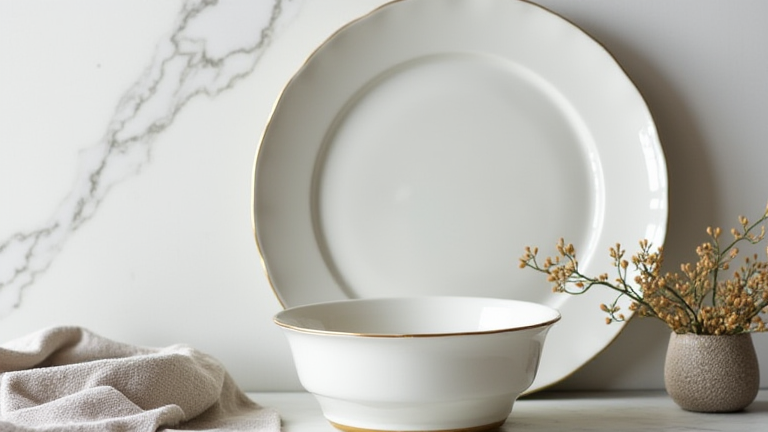
TL;DR: Choose porcelain by balancing aesthetic harmony with physical durability—look for high-fired, translucent bodies (bone china or hard-paste) for everyday resilience, and prioritize pieces that match your dining rituals, not just trends. Test weight, glaze smoothness, and chip resistance before committing to a full set.
The Art of the Table: Porcelain as a Cultural Compass
Every time you lift a cup of tea, you’re holding a fragment of history. Porcelain was once the “white gold” that fueled empires, traveled the Silk Road, and inspired royal factories from Jingdezhen to Meissen. Buying porcelain today isn’t just a home-decor decision—it’s a quiet act of cultural curation. When you choose a plate, you’re deciding which story your dinner table will tell: the rustic warmth of a Provençal bistro, the minimalist discipline of a Japanese tea ceremony, or the opulent flora of an English country garden.
If you want to dig deeper, check out our guide on How to Write a Business Plan for a Coffee Shop: 12-Step Guid.
Start With Your Rituals, Not Trends
Before you browse, ask yourself: How do I actually eat? If your mornings are a slow espresso ritual, a hand-painted demitasse cup with a gold rim adds ceremony. If you host large family dinners, you need stackable, oven-safe stoneware-porcelain hybrids that survive the dishwasher’s fury. Travel is your best teacher—collect a single plate or bowl from each destination you visit. These “travel tiles” become a mosaic of memory, and you’ll learn which clays feel right in your hands. The Japanese concept of kintsugi—repairing cracks with gold—reminds us that a chip doesn’t ruin a piece; it adds character.
Material Matters: Translucency, Weight, and Ring Test
Hold a piece up to the light. True hard-paste porcelain (like most from Limoges or Jingdezhen) is slightly translucent—your fingers cast a soft shadow through the body. Bone china, which contains bone ash, is even more luminous and lighter, but it can be more brittle. Soft-paste porcelain is denser and more opaque, ideal for rustic, everyday use. Run your finger along the unglazed foot ring: it should feel smooth, not gritty. Tap the rim gently with a fingernail—a clear, bell-like ring indicates a high firing temperature (above 1,200°C), which means lower porosity and better chip resistance. Avoid pieces that sound dull or thud; they’re underfired and will absorb stains and moisture.
Finish and Glaze: The Feel of Food
Run your palm across the surface. A glossy glaze is easier to clean but can feel slippery; a matte or textured glaze (like crazed or celadon) adds grip and a handmade feel, but it may craze over time with thermal shock. For daily use, choose a smooth, food-safe glaze with no lead or cadmium—check for “lead-free” labels. Consider the rim: a wide, flat rim gives you a canvas for sauces, while a deep bowl with a rolled edge traps heat and is perfect for soups or ramen. If you’re mixing brands, stick to a neutral palette (cream, slate, or ivory) and let one accent piece—a teal teapot or a coral serving platter—be the hero.
Buying Strategy: Start Small, Invest in Sets
Don’t buy a full 12-piece set on your first purchase. Begin with four dinner plates, four side plates, and four mugs—the “starter trio” that covers 90% of meals. Test them for a month: do they stack evenly? Do they wobble on a flat surface? Do they heat up too fast in the microwave? Only then add bowls, serving platters, and tea cups. For investment pieces (a hand-thrown vase or a signed artisan platter), buy from a local potter or a heritage brand like Villeroy & Boch or Noritake, which often offer replacement pieces for decades. If you
Leave a Reply