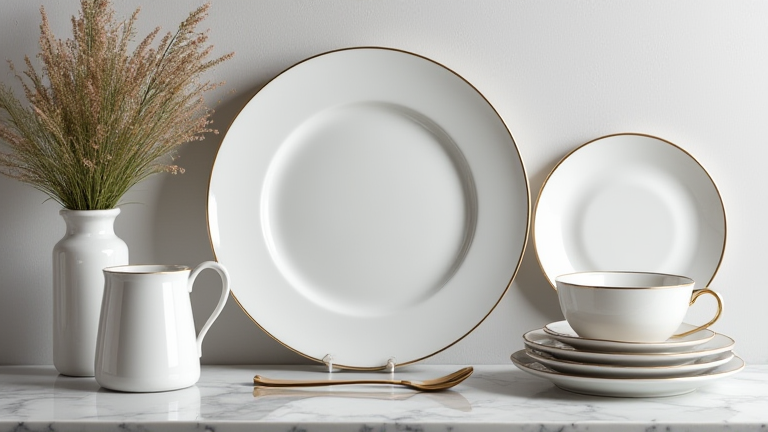
TL;DR: Choose porcelain by prioritizing durability (look for “hard-paste” or “vitrified” bodies), then match your lifestyle with glaze finish—glossy for everyday, matte for decorative. Always verify lead-free certification and microwave/dishwasher safety before purchasing, and buy extra settings for future replacements.
Why Porcelain Matters More Than You Think
Porcelain isn’t just dinnerware—it’s a fusion of clay, feldspar, and quartz fired at over 1,300°C, making it denser and more chip-resistant than stoneware or earthenware. For daily use, hard-paste porcelain (like Limoges or Meissen) offers superior thermal shock resistance, meaning it won’t crack when you pour boiling water into a cold cup. Soft-paste porcelain, while more delicate, suits display cabinets or occasional tea ceremonies. The key trade-off: hard-paste is heavier and pricier, but soft-paste can craze (develop fine cracks) after years of washing.
If you want to dig deeper, check out our guide on The Ultimate Guide to Buying Porcelain: Tips, Types & Care.
Feature Highlights: What to Inspect Before Buying
First, check the foot rim—unfinished, rough edges indicate lower quality. Second, hold pieces up to light: translucent edges signal high-quality porcelain (bone china and fine hard-paste). Third, test glaze absorption by placing a drop of water on an unglazed base; if it beads, the body is vitrified (non-porous). For patterns, over-glaze decals (painted on top of glaze) fade faster than under-glaze designs, which are fired into the clay. Finally, confirm the “lead-free” label—many vintage imports use lead in red or yellow pigments.
Comparison: Porcelain vs. Bone China vs. Stoneware
Porcelain wins on thinness and chip resistance, but bone china (25–45% bone ash) is lighter and more translucent, though softer and prone to scratching. Stoneware is thicker, cheaper, and microwave-safe but absorbs moisture over time if glazed poorly. For a mid-range budget, high-fire porcelain from Japanese brands like Noritake or German Villeroy & Boch offers the best balance—they’re dishwasher-proof and stack well. Luxury brands like Herend or Wedgwood cost 3–5x more, but their hand-painted details are decorative, not for daily abuse.
How to Match Porcelain to Your Lifestyle
If you have kids or host frequent dinners, choose porcelain marked “chip-resistant” and buy 12-piece sets with a 2-year replacement guarantee. For coffee lovers, select mugs with wider bases and insulated handles. For oven use, check if the piece is “oven-safe to 300°F” (most porcelain is, but metallic trims are not). Avoid matte glazes if you eat tomato-based dishes—they stain permanently. Always order one extra serving piece (e.g., a platter or large bowl) because porcelain lines are discontinued within 3–5 years.
Call-to-Action: Ready to upgrade your table? Browse our curated porcelain collections with free shipping and a 30-day return policy—use code PORCELAIN10 for 10% off your first set.
FAQ
Q: Can I put porcelain in the microwave?
A: Yes, if it’s labeled “microwave-safe” and has no metallic rims or gold/silver trims. Test by microwaving an empty cup for 30 seconds—if the rim stays cool, it’s safe.
Q: How do I remove tea stains from porcelain cups?
A: Soak in a 1:3 solution of white vinegar to warm water for 15 minutes, then scrub with baking soda paste. Avoid abrasive pads—they dull the glaze.
Q: Is handmade porcelain worth the higher price?
A: Only if you value uniqueness—handmade pieces have slight irregularities and may not stack perfectly. Machine-made porcelain is more uniform and better for daily use; handmade suits special occasions.</p
Leave a Reply