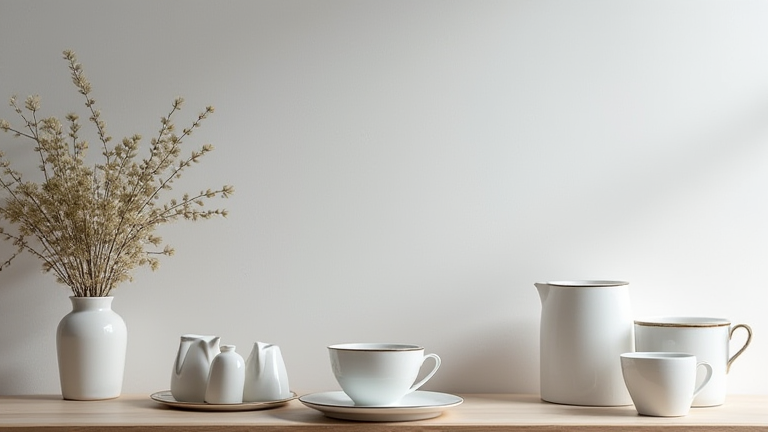
TL;DR: Focus on translucency, ring clarity, and hardness to spot quality porcelain, and always verify the manufacturer’s stamp or certificate. For beginners, buy from reputable brands or artisan studios, and start with versatile dinner plates or tea sets rather than collectible figurines.
1. Learn the Four Basic Types of Porcelain
Before buying, understand the main categories: hard-paste (true porcelain, fired at 1400°C+), soft-paste (fired lower, more fragile), bone china (contains bone ash, whiter and tougher), and hybrid (industrial or decorative). For daily use, bone china is the most chip-resistant. For traditional value, hard-paste is the gold standard. Ask the seller which type you’re examining—this determines price and care.
If you want to dig deeper, check out our guide on Porcelain Buying Guide: Health, Safety & Care Tips.
2. Perform the Translucency Test
Hold the piece up to a bright light or window. High-quality porcelain is translucent—you should see a soft, warm glow through the body, especially at the rim. If the piece is completely opaque, it’s likely stoneware or low-fired porcelain. Place your hand behind a thin cup; if you can see the faint outline of your fingers, that’s a good sign. Thick, heavy, or cloudy pieces are lower grade.
3. Check the Ring Test for Durability
Gently tap the rim of a plate or cup with your fingernail or a metal spoon. A clear, bell-like ring that lasts 2–3 seconds indicates high-density, well-fired porcelain. A dull “thud” or a short, flat sound means under-firing or added fillers. Do this on multiple pieces in a set—they should all produce nearly identical tones. If one sounds different, it’s a defect.
4. Inspect the Glaze and Foot (Base)
Run your fingers over the surface. The glaze should be smooth, free of pinholes, bubbles, or crazing (fine cracks). Crazing weakens the piece and traps bacteria. Turn the piece over: the foot (un-glazed ring) should be clean, finely ground, and free of rough chips. High-end porcelain has a polished, slightly recessed foot. Avoid pieces with drips or pooled glaze on the underside.
5. Verify the Mark and Provenance
Look for a maker’s mark on the base—either printed, painted, or impressed. Recognizable brands (Meissen, Royal Copenhagen, Wedgwood, Noritake) have clear, consistent marks. For artisan pieces, ask for a certificate of origin or studio stamp. Be wary of “porcelain” sold without any mark or with a sticker that peels off—this often signals mass-produced earthenware. Check the country of origin; Jingdezhen (China), Limoges (France), and Meissen (Germany) are historical hotspots.
6. Match Your Use to the Clay Body
Decide how you’ll use the item. For daily microwave and dishwasher use, choose bone china or hard-paste with a high-temperature glaze. For display only, soft-paste or hand-painted pieces are fine. For tea or coffee, look for a thin, light cup (under 200g) that doesn’t burn your lips. For dinnerware, ensure plates are stackable and have a raised rim to prevent scratching.
7. Set a Budget and Buy a Single Test Piece
Don’t buy a full 12-piece set on your first purchase. Instead, buy one plate, one cup, or one small vase from the line you’re considering. Use it for a week—wash it, microwave it, drop it on a towel. If it survives without crazing, chipping, or dulling, then invest in the full set. This saves money and teaches you the feel of that specific clay body.
FAQ
Q: How can I tell if porcelain is antique or just a modern reproduction?
A: Check the foot for
Leave a Reply