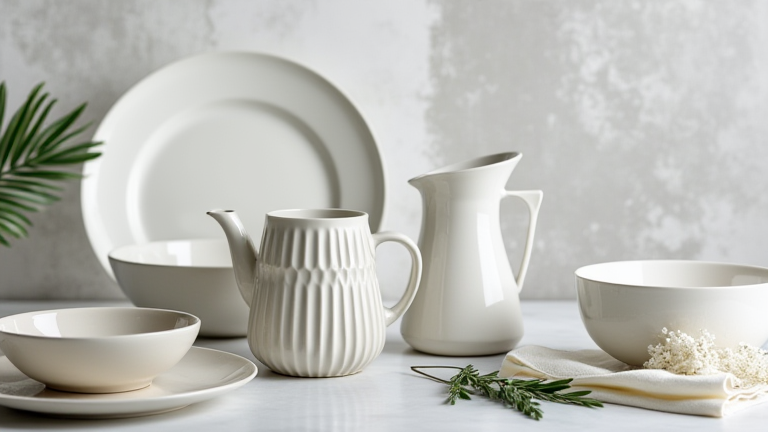
TL;DR: Focus on translucency, ring tone, and weight to judge quality, and always check the base for unglazed foot rings. Start with mid-range brands like Noritake or Villeroy & Boch before investing in antique or hand-painted pieces.
Porcelain Buying Guide: 10 Tips for Beginners
1. Know the difference between porcelain and ceramic. Porcelain is fired at higher temperatures (above 1,200°C), making it denser, whiter, and less porous than stoneware or earthenware. Tap the rim—true porcelain produces a clear, bell-like ring that lasts 2–3 seconds.
If you want to dig deeper, check out our guide on Porcelain Buying Guide: Expert Tips for Choosing the Best.
2. Perform the translucency test. Hold a plate or cup up to a bright light. High-quality porcelain (especially bone china) will show a soft, warm glow through the body. If it blocks all light, it’s likely stoneware or low-fired porcelain.
3. Check the foot ring (the unglazed bottom edge). Genuine porcelain often has a rough, unglazed foot ring that feels sandy. This is a factory mark of authenticity. If the entire base is glazed, it may be a cheaper “porcelain-like” ceramic.
4. Examine the glaze for crazing. Tiny hairline cracks in the glaze (crazing) indicate thermal stress or poor firing. Avoid these—they weaken the piece and can harbor bacteria. A smooth, glossy, pinhole-free surface is ideal.
5. Weigh it in your hand. Porcelain should feel surprisingly heavy for its size due to its density. However, bone china feels lighter. Compare two same-sized pieces—the heavier one is usually higher-fired porcelain.
6. Look for the country of origin. Japanese (Noritake, Narumi), German (Meissen, Rosenthal), and English (Wedgwood, Royal Doulton) brands are benchmarks. Chinese “fine china” can be excellent, but check for a stamp like “Made in Jingdezhen” for authenticity.
7. Test the edge chipping. Run your finger along the rim. High-quality porcelain has a thin, sharp, even edge. Thick, rolled rims are common on mass-produced dinnerware. Chipped edges are non-negotiable—never buy chipped porcelain, even at a discount.
8. Verify the decoration type. Underglaze patterns (painted before glazing) are permanent and safe for dishwashers. Overglaze enamels or gold trim will wear off with washing. Check the bottom for “overglaze” or “hand-painted” labels.
9. Ask about microwave and dishwasher safety. Real porcelain is microwave-safe unless it has metallic trim. Dishwasher-safe only if the glaze is free of crazing. When in doubt, hand wash with mild soap—this preserves the glaze for decades.
10. Buy from reputable retailers with return policies. Avoid flea-market mystery pieces unless you can verify age and maker. Start with a 5-piece place setting from a known brand. For antiques, request a provenance letter or COA (certificate of authenticity).
FAQ
Q: How do I tell if porcelain is antique or just old?
A: Look for underglaze blue marks, hand-painted irregular edges, and a slightly yellowed glaze. Antique porcelain often has a “wobble” in the foot ring (hand-thrown). Use a UV light—old pieces fluoresce yellow-green under UV, while modern ones stay dark.
Q: Is bone china better than hard-paste porcelain?
A: Not “better,” but different. Bone china (contains 30% bone ash) is more translucent and chip-resistant but less heat-shock resistant. Hard-paste porcelain (Kaolin, feldspar, quartz) is more durable for daily use. Choose
Leave a Reply