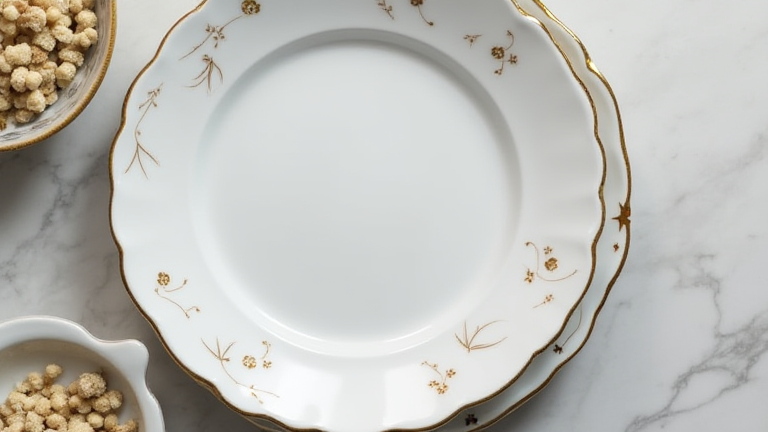
TL;DR: Focus on translucency, ring, and weight to spot quality porcelain, then match your piece’s intended use (dinnerware vs. decor) to its body type (hard-paste vs. bone china). Always buy from a reputable dealer and check for chips or crazing under bright light before committing.
1. Know Your Porcelain Types
Start by distinguishing hard-paste (true porcelain, fired at 1400°C), soft-paste (lower fire, more fragile), and bone china (contains bone ash, whiter and more chip-resistant). For daily use, choose bone china; for heirloom collectibles, hard-paste is the standard.
If you want to dig deeper, check out our guide on Porcelain Buying Guide: How to Choose the Perfect Vase.
2. Perform the “Ring” Test
Gently tap the rim with a fingernail or a metal spoon. High-quality porcelain produces a clear, bell-like tone that lingers for 2–3 seconds. A dull thud indicates under-firing or hidden cracks.
3. Check Translucency
Hold the piece up to a strong light source. Your fingers should cast a faint shadow through the body. The more translucent the porcelain (without being paper-thin), the higher the kaolin content and firing quality.
4. Examine the Glaze and Foot
Run your fingers over the surface. The glaze should be smooth, even, and free of pinholes. Flip the piece over—the unglazed foot ring should be perfectly smooth and slightly recessed. Rough or wavy foot rings signal poor craftsmanship.
5. Weigh It in Your Hand
Good porcelain feels surprisingly light for its size, yet dense. If it feels clunky or overly heavy, it likely has a high feldspar content or is actually stoneware mislabeled as porcelain.
6. Inspect for Crazing and Chips
Under a bright lamp or magnifier, look for fine hairline cracks (crazing) in the glaze and any tiny chips along edges. Crazing weakens the piece and traps bacteria. Never buy crazed porcelain for food service.
7. Verify Patterns and Decals
Hand-painted designs should have slight brushstroke variation. If the pattern is perfectly uniform with no texture, it’s a transfer decal—fine for budget buys, but not for investment pieces. Look for a maker’s mark on the base.
8. Test Dishwasher and Microwave Safety
Ask the seller or check the base for symbols. Most modern porcelain is microwave-safe, but gold or platinum rims are not. For dishwasher use, avoid pieces with metallic luster—they will fade within 20 washes.
9. Compare Prices by Weight and Brand
As a rule of thumb, a quality porcelain dinner plate (25cm) should cost $15–$40. Premium brands like Meissen or Herend command $100+ per piece. Divide the price by weight (grams) — anything under $0.10/g is likely low-grade.
10. Buy from Returns-Friendly Retailers
Purchase from stores with a 30-day return policy. Porcelain can have invisible internal flaws that only show after your first wash. Keep the original packaging for at least two weeks.
FAQ
Q: How can I tell if porcelain is antique or just a reproduction?
A: Look for the maker’s mark—antiques have hand-painted or incised marks with irregular spacing. Reproductions use crisp machine-stamped marks. Also, antique porcelain often has a slightly yellowed glaze and a heavier foot ring.
Q: Is bone china better than porcelain for everyday dinnerware?
A: Yes, for daily use. Bone china has 25–30% bone ash, making it more chip-resistant and lighter than hard-paste porcelain. However, it is less translucent and can be more expensive. For formal
Leave a Reply