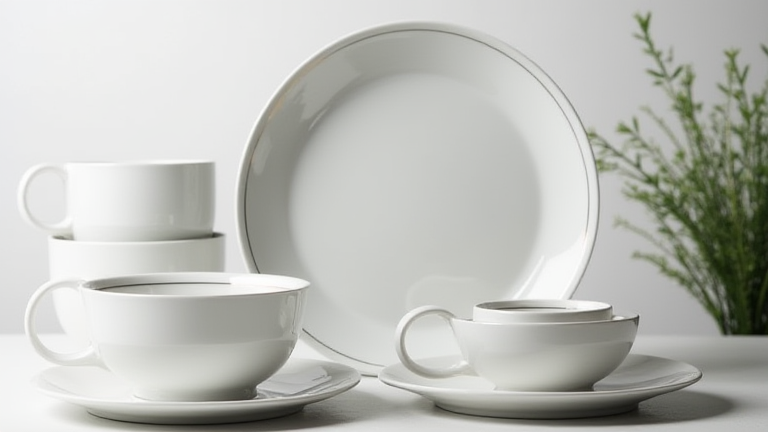
TL;DR: Choose porcelain sets by checking for high translucency, a clear ringing tone when tapped, and a chip-resistant, lead-free glaze; prioritize sets with reinforced rims and dishwasher-safe labels. Match the set’s weight, decoration, and number of place settings to your daily use, not just occasion.
Step 1: Understand the Three Types of Porcelain
Before buying, know that “porcelain” broadly includes hard-paste, soft-paste, and bone china. Hard-paste (true porcelain) is fired at ~1400°C, making it dense and durable. Soft-paste is easier to chip but often more affordable. Bone china contains at least 30% bone ash, giving it superior whiteness and strength at thinner thicknesses. For daily family use, choose hard-paste or bone china; for decorative sets, soft-paste is fine.
If you want to dig deeper, check out our guide on Porcelain Buying Guide: How to Choose the Best Pieces for Yo.
Step 2: Test Translucency and Sound
Hold a plate up to a light source. High-quality porcelain will show a soft, warm glow through the body—this indicates proper vitrification. Next, gently tap the rim with a fingernail or a metal spoon. A clear, bell-like ring that lingers for 2–3 seconds means the piece is well-fired. A dull thud suggests under-firing or internal cracks. Avoid sets with any item that sounds “dead.”
Step 3: Check the Glaze and Rim Strength
Run your fingers over the surface and edges. The glaze should be smooth, without pinholes, bubbles, or crazing (fine hairline cracks). Look at the rim—the thinnest point—and press gently. Quality porcelain has a rounded, reinforced rim that resists chipping. Also, tilt a cup to inspect the foot ring; it should be unglazed but smooth. Avoid any piece with exposed gray or brown body, which indicates lower-quality clay.
Step 4: Evaluate Decoration and Safety
If the set has patterns, check if they are underglaze (painted before the final glaze) or overglaze (painted on top). Underglaze is safer and more durable. For overglaze designs, ensure they are labeled “lead-free” or “food-safe.” Rub the decoration with a damp white cloth—if color transfers, the piece is not food-safe. Also, gold or platinum trim is not microwave-safe; decide if that matters for your lifestyle.
Step 5: Match Set Size and Weight to Your Needs
Count your household’s daily cups and plates. A standard set includes 4–5 place settings (dinner plate, salad plate, bowl, mug). For small families, buy a 4-piece set; for entertaining, get 8–12. Pick up a dinner plate—it should feel substantial but not heavy. Too light may mean thin, brittle porcelain; too heavy indicates poor clay density. Ensure the stack fits your cabinet shelves and that plates are no larger than 10.5 inches (unless you have a large dishwasher).
Step 6: Verify Care Labels and Warranty
Finally, read the manufacturer’s care instructions. Most quality porcelain is dishwasher and microwave safe, but avoid sudden temperature changes (don’t put a cold plate in a hot oven). Check for a replacement guarantee—many brands offer 5–10 years of piece replacement. If the set lacks a care label or warranty, it’s likely low-grade. Buy from a retailer with a return policy so you can test one plate at home for 30 days.
FAQ
Q: Is bone china better than regular porcelain for everyday use?
A: Yes for durability—bone china resists chipping better due to its added bone ash, but it’s often more expensive. For heavy daily use, bone china is superior; for occasional formal dining, hard-paste porcelain is fine.
Q: Can I put porcelain dinnerware in the microwave?
A: Only if it’s explicitly labeled microwave
Leave a Reply