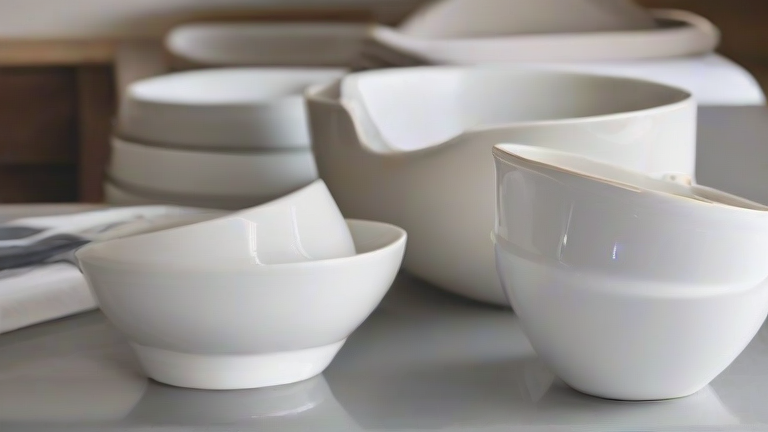
TL;DR: Choose porcelain by checking for translucency, a clear ring when tapped, and a chip-resistant, lead-free glaze—not by brand hype alone. Prioritize sets that are dishwasher-safe, stackable, and match your daily use, not just formal occasions.
Why Porcelain Beats Everyday Stoneware
Porcelain is fired at higher temperatures (1,265–1,400°C) than stoneware or earthenware, making it denser, less porous, and more vitrified. That means better thermal shock resistance (hot coffee won’t crack it), a smoother texture, and a brighter white that doesn’t yellow over time. However, not all porcelain is equal—bone china adds bone ash for extra strength and translucency, but it’s often pricier and more delicate. For daily use, standard hard-paste porcelain is the sweet spot: durable, elegant, and affordable.
If you want to dig deeper, check out our guide on The Ultimate Porcelain Buying Guide for a Stylish Lifestyle.
10 Tips for Choosing the Perfect Set
1. Check the “Ring” Test. Tap the rim with a fork—high-quality porcelain produces a long, bell-like ring; dull thuds indicate lower density or cracks.
2. Hold It Up to Light. Translucency is a hallmark of fine porcelain. If light passes through the rim, you have true porcelain, not opaque stoneware masquerading as it.
3. Inspect the Glaze for Pinholes. Run your finger over the surface. Tiny pits trap bacteria and stain easily. A flawless, glossy glaze is non-negotiable for hygiene.
4. Verify Lead & Cadmium-Free Labels. Look for “lead-free” on the box or FDA compliance. Cheap imported sets may use decorative glazes with heavy metals—dangerous for acidic foods.
5. Choose Stackable Shapes. Flared rims and deep bowls stack poorly, wasting cabinet space. Opt for straight-sided mugs and flat-rimmed plates for compact storage.
6. Test Microwave & Freezer Safety. Not all porcelain is microwave-safe—metallic trim (gold, platinum) will spark. Freezer-to-oven safe porcelain should say “thermal shock resistant” explicitly.
7. Count Pieces, Not Sets. A “16-piece set” often means only 4 place settings. For a family of four, buy 8 dinner plates, 8 salad plates, 8 bowls, and 8 mugs separately—more versatile and less waste.
8. Compare Weight, Not Thickness. Heavy doesn’t mean durable; it means thick. A thin, lightweight plate that doesn’t flex under pressure is ideal. Bend-test gently—if it flexes, it’s not porcelain.
9. Look for Reinforced Rims. Chips happen at edges. Some brands add a slightly rolled rim for impact resistance. Run your thumb along the edge—smooth, rounded rims chip less than sharp, squared ones.
10. Read Return Policies for Replacements. Even top brands discontinue patterns. Choose a line with a 3–5 year replacement guarantee, or buy extra pieces upfront. Corelle and Villeroy & Boch offer long-term availability.
Feature Highlights: Top Contenders Compared
Corelle Vitrelle (not technically porcelain but a tempered glass-porcelain hybrid) is nearly unbreakable and ultra-thin, but it lacks the warm translucency of true porcelain. Denby offers stoneware with a porcelain glaze—durable but heavier and less refined. For authentic porcelain, Noritake Colorwave delivers chip-resistant, microwave-safe pieces at $15–$25 per item, while Le Creuset Porcelain adds a matte finish and stronger thermal shock resistance but costs 2x more. If you want bone china’s elegance without the price, <strong
Leave a Reply